
The word abandoned describes something or someone that has been left behind, deserted, neglected, or given up. It can refer to an empty building, an unfinished project, a person who feels unsupported, or a plan that someone decides not to continue. Although these meanings are related, the best replacement depends on the situation.
Choosing the right synonym can make your writing clearer, more natural, and more precise. For example, deserted works well for an empty place, neglected describes something that has not received proper care, and discontinued suits a service or activity that has ended. In emotional writing, forsaken may express a deeper sense of being left behind.
This guide explains the most useful alternatives to abandoned, including formal, neutral, and casual expressions. You will also find example sentences, grammar tips, comparison tables, professional writing advice, and answers to common questions.
Quick Answer: What Are the Best Synonyms for Abandoned?
The best synonyms for abandoned include deserted, forsaken, neglected, left behind, discarded, relinquished, vacated, deserted by, given up, and discontinued. However, these words are not interchangeable in every sentence. Use deserted for empty places, neglected for things lacking care, and relinquished for something voluntarily given up.
Quick List of Synonyms for Abandoned
Here are useful alternatives organized by meaning and tone.
Closest Synonyms
- Deserted
- Forsaken
- Left behind
- Given up
- Cast aside
- Discarded
- Relinquished
- Vacated
- Jilted
- Renounced
Formal Alternatives
- Relinquished
- Discontinued
- Surrendered
- Renounced
- Withdrawn
- Ceased
- Divested
- Disavowed
- Vacated
- Unoccupied
Neutral Alternatives
- Left
- Unused
- Empty
- Unattended
- Neglected
- Uninhabited
- Disused
- Unclaimed
- Unfinished
- Unmaintained
Casual Alternatives
- Left behind
- Given up on
- Walked away from
- Ditched
- Dropped
- Thrown away
- Left out
- Walked out on
Contextual Alternatives
- For buildings: deserted, vacant, unoccupied, disused
- For relationships: forsaken, rejected, left behind
- For projects: discontinued, dropped, shelved
- For responsibilities: neglected, shirked, ignored
- For possessions: discarded, unwanted, cast aside
- For plans: relinquished, scrapped, given up
Formal Alternatives to Synonyms for Abandoned

Formal alternatives are useful in academic writing, business reports, official correspondence, and professional communication. The following words express related meanings but differ in how and when they should be used.
1. Relinquished
Meaning: Voluntarily gave up something, such as a right, position, or responsibility.
Explanation: Relinquished emphasizes the act of giving something up. It does not necessarily mean that someone left something neglected.
Example: The director relinquished control of the project after the merger.
Best Use: Legal documents, business reports, and discussions about rights or duties.
Worst Use: Describing an empty house. A house is not usually called relinquished unless ownership or control is the focus.
Tone: Formal and precise.
2. Discontinued
Meaning: Stopped an activity, product, service, or process.
Explanation: This word is suitable when something is no longer offered or carried out.
Example: The company discontinued its older software package.
Best Use: Business updates, product announcements, and service notices.
Worst Use: Describing a person who has been left alone. Discontinued does not communicate emotional abandonment.
Tone: Neutral and professional.
3. Renounced
Meaning: Formally rejected or gave up a belief, claim, right, or position.
Explanation: Renounced often suggests a deliberate decision rather than being forced to leave something.
Example: He renounced his claim to the family property.
Best Use: Formal statements involving beliefs, claims, or rights.
Worst Use: Describing an empty building or an object that nobody uses.
Tone: Formal and decisive.
4. Surrendered
Meaning: Gave up control, possession, or resistance.
Explanation: Surrendered can replace abandoned when someone gives up a position or stops defending something. It often suggests pressure, conflict, or defeat.
Example: The team surrendered its lead in the final minutes.
Best Use: Military, competitive, legal, and strategic contexts.
Worst Use: Describing a project that simply received no attention.
Tone: Formal and forceful.
5. Vacated
Meaning: Left a building, room, office, or other occupied space.
Explanation: Vacated focuses on the act of leaving a place. It does not automatically mean the place was neglected or permanently abandoned.
Example: The tenants vacated the apartment at the end of June.
Best Use: Property notices, housing documents, and workplace communication.
Worst Use: Describing an abandoned friendship or an unwanted object.
Tone: Formal and factual.
6. Withdrawn
Meaning: Removed, pulled back, or taken away from participation.
Explanation: A person may withdraw from a project, while a company may withdraw an offer. The word describes removal or disengagement rather than necessarily leaving something behind.
Example: The applicant withdrew her proposal before the deadline.
Best Use: Applications, proposals, offers, and professional communication.
Worst Use: Describing a building that has been left empty.
Tone: Neutral to formal.
7. Disavowed
Meaning: Publicly denied responsibility for or association with something.
Explanation: Disavowed may fit a situation where someone distances themselves from a person, statement, or action. It is not a general synonym for abandoned.
Example: The organization disavowed the unauthorized statement.
Best Use: Official announcements and public statements.
Worst Use: Describing an unused vehicle or empty property.
Tone: Formal and deliberate.
8. Ceased
Meaning: Stopped happening or operating.
Explanation: Ceased describes the end of an activity. Unlike abandoned, it does not necessarily suggest neglect or leaving something behind.
Example: Construction ceased after funding was withdrawn.
Best Use: Reports, academic writing, and formal updates.
Worst Use: Saying a person was abandoned by their family. The emotional meaning would disappear.
Tone: Formal and concise.
9. Divested
Meaning: Disposed of or gave up an asset, interest, or responsibility.
Explanation: Divested is especially useful in financial and corporate contexts. It refers to a deliberate transfer or disposal, not simply leaving something unused.
Example: The company divested its overseas operations.
Best Use: Financial reports, business strategy, and corporate communication.
Worst Use: Describing a deserted street or neglected garden.
Tone: Highly professional.
10. Unoccupied
Meaning: Not currently being used or lived in.
Explanation: Unoccupied is a good alternative when a building, room, or property is empty. It does not prove that the owner has permanently abandoned it.
Example: The office remained unoccupied during the renovation.
Best Use: Real estate listings, property descriptions, and facility reports.
Worst Use: Describing someone who feels emotionally abandoned.
Tone: Neutral and factual.
Semi-Formal and Neutral Alternatives
These alternatives work well in everyday writing, workplace communication, school assignments, and general descriptions.
1. Deserted
Meaning: Left empty or without people.
Explanation: Deserted is one of the closest alternatives when describing a place that people have left.
Example: The travelers discovered a deserted village.
Best Use: Stories, travel writing, and descriptions of empty locations.
Worst Use: Describing a service that has officially ended.
Tone: Neutral, sometimes dramatic.
2. Neglected
Meaning: Not given the care or attention it needs.
Explanation: Neglected emphasizes a lack of maintenance or attention. Something can be neglected without being completely abandoned.
Example: The neglected playground needed repairs.
Best Use: Buildings, gardens, duties, projects, and relationships.
Worst Use: Describing a place that is simply empty for a short time.
Tone: Neutral, often critical.
3. Forsaken
Meaning: Left behind or deserted, often in a serious or emotional sense.
Explanation: Forsaken can describe people, places, or hopes that have been left behind. It usually sounds more literary than abandoned.
Example: The character felt forsaken by everyone she trusted.
Best Use: Fiction, emotional writing, and dramatic descriptions.
Worst Use: Routine workplace updates or simple property listings.
Tone: Emotional and literary.
4. Disused
Meaning: No longer used.
Explanation: Disused is particularly suitable for buildings, roads, facilities, and equipment that are no longer in regular use.
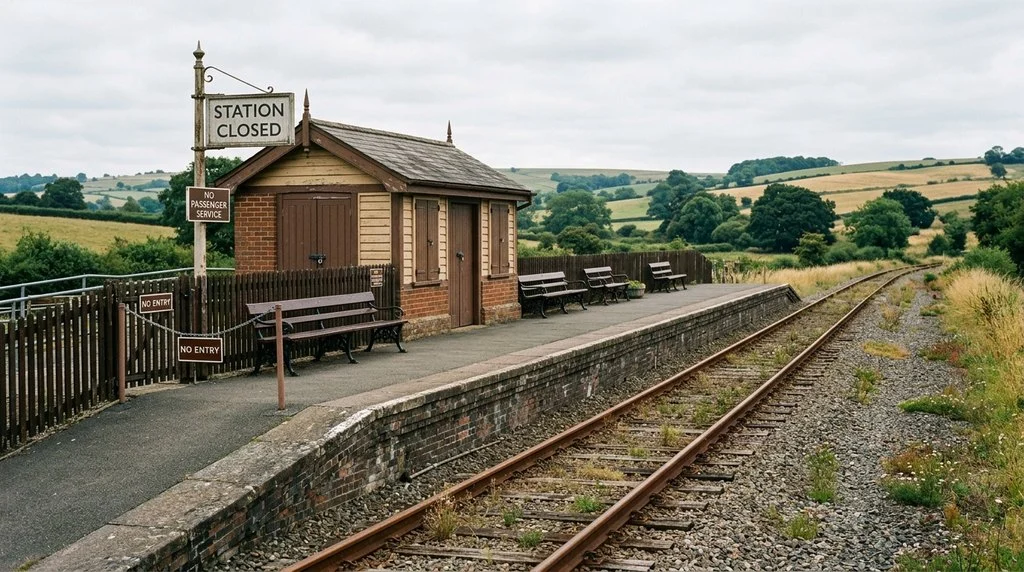
Example: The railway station became disused after the new line opened.
Best Use: Historical descriptions, property reports, and infrastructure writing.
Worst Use: Describing someone who has been left by a friend.
Tone: Neutral and descriptive.
5. Unattended
Meaning: Left without supervision, care, or someone present.
Explanation: An unattended object or place may still have an owner. The word often describes a temporary situation.
Example: The staff reported an unattended bag near the entrance.
Best Use: Safety notices, everyday descriptions, and workplace communication.
Worst Use: Describing something permanently discarded.
Tone: Neutral and practical.
6. Uninhabited
Meaning: Not lived in by people.
Explanation: Uninhabited describes a place without residents. It does not mean the place was necessarily abandoned; it may never have been inhabited.
Example: The island remained uninhabited for most of the year.
Best Use: Geography, travel writing, and property descriptions.
Worst Use: Describing an unfinished project.
Tone: Neutral and factual.
7. Unclaimed
Meaning: Not claimed or collected by anyone.
Explanation: Unclaimed applies to possessions, prizes, property, or other items that nobody has come forward to claim.
Example: The lost wallet remained unclaimed at the front desk.
Best Use: Lost property notices and administrative communication.
Worst Use: Describing an item that its owner has deliberately thrown away.
Tone: Neutral and administrative.
8. Unfinished
Meaning: Not completed.
Explanation: An unfinished project may have been abandoned, but it may also be delayed or still in progress.
Example: The team reviewed the unfinished website before launch.
Best Use: Projects, assignments, writing, construction, and creative work.
Worst Use: Describing an empty house unless construction or completion is the focus.
Tone: Neutral.
9. Left Behind
Meaning: Not taken along or included when someone leaves.
Explanation: This common phrase can describe people, objects, opportunities, or ideas. It may be intentional or accidental.
Example: She realized she had left her notebook behind.
Best Use: Everyday conversation, personal writing, and simple explanations.
Worst Use: Formal legal writing when the exact action needs to be specified.
Tone: Conversational and clear.
10. Unmaintained
Meaning: Not regularly cared for or kept in good condition.
Explanation: Unmaintained focuses on the lack of upkeep. A property can be unmaintained while someone still owns or uses it.
Example: The unmaintained path had become difficult to walk on.
Best Use: Maintenance reports, facilities management, and property descriptions.
Worst Use: Describing a relationship that has ended.
Tone: Neutral and technical.
Informal and Casual Alternatives
Casual alternatives work in conversation, text messages, and informal writing. Some have stronger or more judgmental meanings than abandoned.
1. Ditched
Meaning: Left someone or something, sometimes suddenly or without explanation.
Example: He ditched the old plan and suggested a simpler one.
When It Sounds Natural: Casual conversations about plans, possessions, or social situations.
When to Avoid It: Formal reports or sensitive situations where the word may sound disrespectful.
Tone: Informal and sometimes dismissive.
2. Dropped
Meaning: Stopped pursuing or continued no longer with something.
Example: We dropped the idea after reviewing the costs.
When It Sounds Natural: Talking about plans, ideas, courses, and projects.
When to Avoid It: When describing someone left without support, because dropped may sound too casual.
Tone: Informal to neutral.
3. Given Up On
Meaning: Stopped believing in, supporting, or trying to achieve something.
Example: They had not given up on their community project.
When It Sounds Natural: Conversations about goals, plans, and relationships.
When to Avoid It: Legal documents or contexts requiring a precise description of ownership or responsibility.
Tone: Conversational and sometimes emotional.
4. Walked Away From
Meaning: Chose to leave a situation, commitment, or opportunity.
Example: She walked away from the deal because the terms were unfair.
When It Sounds Natural: Discussing decisions, conflicts, or commitments.
When to Avoid It: When someone was forced to leave rather than choosing to do so.
Tone: Conversational and decisive.
5. Thrown Away
Meaning: Discarded as unwanted or useless.
Example: The damaged boxes were thrown away.
When It Sounds Natural: Everyday conversation about objects, materials, and belongings.
When to Avoid It: Describing a person or relationship, unless the phrase is intentionally figurative and appropriate to the context.
Tone: Casual and direct.
6. Shelved
Meaning: Put aside an idea or project, often temporarily or indefinitely.
Example: The school shelved its plans for a new library.
When It Sounds Natural: Talking about projects, proposals, and future plans.
When to Avoid It: Describing an empty building or a person who has been deserted.
Tone: Informal to professional.
7. Scrapped
Meaning: Decided to cancel or completely abandon a plan, design, or project.
Example: The developers scrapped the original design.
When It Sounds Natural: Conversations about canceled projects or discarded plans.
When to Avoid It: Sensitive situations involving people or responsibilities, where it may sound harsh.
Tone: Direct and informal.
True Synonyms vs. Contextual Alternatives
Not every word related to abandoned carries the same meaning. Understanding the difference helps you choose the right expression.
| Type | What It Means | Can It Replace Abandoned? |
|---|---|---|
| True synonym | A word with nearly the same meaning in a specific context | Yes, when the context matches |
| Near synonym | A word with a similar but slightly different meaning | Often, with care |
| Contextual alternative | A phrase that works in a particular situation | Yes, in that situation |
| Broader expression | A word or phrase covering more situations | Sometimes, but detail may be lost |
| Narrower expression | A term with a more specific meaning | Only when that specific meaning applies |
For example, deserted can replace abandoned in “an abandoned building” when the emphasis is on the building being empty. Neglected is more accurate if the building has fallen into disrepair because nobody maintains it. Discontinued is better for a product that is no longer sold.
Similarly, left behind can describe someone who has been abandoned, but it does not always imply rejection. Forsaken adds a stronger emotional or literary tone.
Industry-Specific Usage
The most appropriate alternative depends on the field, audience, and purpose of the document.
Business Writing
In business writing, clarity is more valuable than choosing a sophisticated word.
- Use discontinued for a product or service that is no longer offered.
- Use shelved for a proposal that has been put aside.
- Use dropped for an idea that is no longer being pursued.
- Use neglected when a task or responsibility has not received enough attention.
Example:
Instead of: “The company abandoned its customer support program.”
Write: “The company discontinued its customer support program.”
Use discontinued if the program was formally ended. If the company merely stopped maintaining it, neglected may be more accurate.
Corporate Communication
Corporate announcements should explain what happened without suggesting more than the facts support.
Example:
“The team shelved the expansion proposal pending a review of operating costs.”
This wording indicates that the proposal has been put aside, not necessarily canceled forever.
For a permanent cancellation, write:
“The company canceled the expansion project.”
Choose discontinued, canceled, or withdrawn according to the actual action.
Academic Writing
Academic writing benefits from specific descriptions rather than emotional or vague wording.
Consider these examples:
- “The abandoned research project” → “The discontinued research project”
- “The abandoned argument” → “The unsupported argument,” if evidence is missing
- “The abandoned building” → “The disused building,” if it is no longer used
- “The abandoned method” → “The method was no longer used”
Avoid using neglected as a replacement unless you mean that something did not receive adequate attention.
Customer Service
Customer service messages should be polite, clear, and helpful.
Instead of writing:
“Your abandoned order has been deleted.”
Consider:
“Your incomplete order was removed from your account after the checkout process was not completed.”
However, use abandoned cart when it is the established term for an online shopping cart containing items that a customer did not purchase. It is widely understood in e-commerce and does not automatically mean the customer deliberately rejected the products.
Legal Writing
Legal language requires special care because words that appear similar can describe different actions.
- Relinquished: Gave up a right, claim, or interest.
- Surrendered: Gave up possession, control, or something required by an arrangement.
- Vacated: Left a property or position, depending on context.
- Renounced: Formally rejected a claim, right, or status.
- Deserted: Left a place or person, sometimes with implications that depend on the circumstances.
For example, vacated a property does not necessarily mean abandoned a property. Someone may leave a property temporarily, under an agreement, or after transferring possession.
In legal documents, use the specific term that matches the relevant facts and governing rules. A casual synonym may change the intended meaning.
Email Communication
For professional emails, choose a word that explains the status of the work.
- Discontinued: “The service has been discontinued.”
- Shelved: “The proposal has been shelved for further review.”
- Withdrawn: “The request has been withdrawn.”
- Unfinished: “The report remains unfinished.”
- Neglected: “Several maintenance tasks were neglected.”
These phrases make it easier for readers to understand whether something has ended, been paused, or simply not received enough attention.
Email Examples Using Alternatives to Synonyms for Abandoned
The following examples show how different alternatives work in realistic professional and academic messages.
1. Client Email: Discontinued Service
Update on Service AvailabilityUpdate on Service Availability
Hello Jordan,
I’m writing to let you know that we have discontinued the older version of our reporting service. The updated version is now available and includes the main features previously offered.
Please let me know if you need help moving your existing reports to the new system.
Best regards,
Alex
2. Internal Email: Shelved Proposal
Status of the Office Expansion ProposalStatus of the Office Expansion Proposal
Hi Team,
We have shelved the office expansion proposal while we review the current budget and space requirements.
No further action is needed at this stage. I’ll share an update once the review is complete and a decision has been made.
Thanks,
Morgan
3. Project Email: Unfinished Work
Remaining Tasks for the Website ProjectRemaining Tasks for the Website Project
Hi Priya,
I reviewed the latest website draft and found that a few sections remain unfinished, including the contact page and mobile layout.
Could you update those sections before Friday? Please flag any items that need additional support.
Best,
Sam
4. Property Email: Vacated Office
Confirmation of Office VacancyConfirmation of Office Vacancy
Dear Mr. Lewis,
This email confirms that the office was vacated on September 30. We are arranging a final inspection and will follow up regarding the return of the keys.
Please contact me if you need any additional information.
Sincerely,
Taylor Reed
5. Academic Email: Withdrawn Proposal
Withdrawal of Research ProposalWithdrawal of Research Proposal
Dear Professor Adams,
I would like to confirm that I have withdrawn my original research proposal because I need to revise the scope of the study.
I plan to submit a revised version after reviewing the feedback you provided. Thank you for your guidance.
Best regards,
Jamie
Short Dialogue Examples
1. Workplace Conversation
Person A: What happened to the old training program?
Person B: Management discontinued it after introducing the new system.
2. Classroom Conversation
Person A: Why isn’t the group project finished?
Person B: We haven’t abandoned it. We still need to complete the final section.
3. Customer Service Conversation
Person A: Why is my shopping cart still showing items?
Person B: Your cart was saved, but the checkout process wasn’t completed.
4. Casual Conversation
Person A: Are you still working on that business idea?
Person B: Not anymore. I dropped it because I found a better opportunity.
5. Property Discussion
Person A: Is that old house abandoned?
Person B: It looks unoccupied, but we don’t know whether the owner plans to return.
How to Replace “ Synonyms for Abandoned” in a Sentence
The best replacement depends on what was left, why it was left, and whether the action was intentional.
1. An Abandoned Building
Original: The abandoned building stood near the river.
Alternative: The deserted building stood near the river.
Why it works: Deserted emphasizes that the building is empty. Disused would be better if you wanted to emphasize that it is no longer used.
2. An Abandoned Project
Original: The team abandoned the project.
Alternative: The team discontinued the project.
Why it works: Discontinued sounds more formal and suggests that the work was stopped. If the decision is temporary, use shelved instead.
3. An Abandoned Child
Original: The child felt abandoned by his family.
Alternative: The child felt forsaken by his family.
Why it works: Forsaken conveys a stronger emotional sense of being left behind. It sounds more literary than abandoned.
4. An Abandoned Plan
Original: We abandoned our original plan.
Alternative: We dropped our original plan.
Why it works: Dropped sounds natural in everyday conversation. For a formal report, discontinued or decided not to pursue may work better.
5. An Abandoned Garden
Original: The abandoned garden was full of weeds.
Alternative: The neglected garden was full of weeds.
Why it works: Neglected explains the garden’s poor condition by emphasizing the lack of care.
6. An Abandoned House
Original: They bought an abandoned house.
Alternative: They bought a vacant house.
Why it works: Vacant means the house is unoccupied. It does not necessarily mean the property has been permanently abandoned.
7. An Abandoned Shopping Cart
Original: The store sent a reminder about my abandoned shopping cart.
Alternative: The store sent a reminder about my incomplete purchase.
Why it works: Incomplete purchase focuses on the transaction rather than the cart. However, abandoned cart remains a natural, established e-commerce term.
8. An Abandoned Responsibility
Original: He abandoned his responsibilities.
Alternative: He neglected his responsibilities.
Why it works: Neglected suggests that he failed to give his duties the necessary attention. If he deliberately refused to perform them, shirked his responsibilities may be more precise.
9. An Abandoned Proposal
Original: The organization abandoned its proposal.
Alternative: The organization withdrew its proposal.
Why it works: Withdrew is suitable when the organization formally removes a proposal from consideration.
10. An Abandoned Belief
Original: She abandoned her earlier belief.
Alternative: She renounced her earlier belief.
Why it works: Renounced emphasizes a deliberate rejection of a belief or position. In ordinary writing, gave up that belief may sound more natural.
Comparison Table of Common Alternatives
| Phrase | Tone | Meaning / Scope | Best Use | Example |
|---|---|---|---|---|
| Deserted | Neutral | Left empty | Places | A deserted street |
| Forsaken | Literary | Left behind, often emotionally | Fiction | A forsaken character |
| Neglected | Neutral | Not properly cared for | Duties, buildings | A neglected garden |
| Discontinued | Professional | Officially stopped | Services, products | A discontinued service |
| Relinquished | Formal | Voluntarily gave up | Rights, control | Relinquished control |
| Vacated | Formal | Left a space | Property | A vacated office |
| Disused | Neutral | No longer used | Buildings, facilities | A disused station |
| Unattended | Neutral | Without supervision | Objects, spaces | An unattended bag |
| Shelved | Informal to professional | Put aside | Plans, proposals | A shelved proposal |
| Scrapped | Casual | Canceled or discarded | Projects, designs | A scrapped plan |
| Unclaimed | Neutral | Not claimed | Property, items | Unclaimed luggage |
| Unfinished | Neutral | Not completed | Work, projects | An unfinished report |
Which Alternative Should You Choose?
Use this practical guide to find the right word for your writing.
For Formal Writing
Choose relinquished, discontinued, withdrawn, or vacated when the context supports the meaning.
Example: “The applicant withdrew the request.”
For Business Communication
Choose discontinued for a service that has ended and shelved for a proposal that has been put aside.
Example: “The team shelved the proposal pending a budget review.”
For Academic Writing
Choose disused, neglected, discontinued, or no longer pursued, depending on the facts.
Example: “The researchers discontinued the original procedure.”
For Legal Writing
Use precise terms such as relinquished, surrendered, vacated, or renounced only when they accurately describe the relevant action. Do not substitute one for another just to avoid repetition.
For Professional Emails
Choose clear, neutral wording.
Example: “The project has been discontinued” is more direct than “The project has been abandoned” if the project was formally ended.
For Everyday Conversation
Use left behind, dropped, gave up on, or walked away from.
Example: “We dropped the idea after talking it over.”
For Casual Messages
Choose ditched, dropped, or scrapped when the situation is informal and the tone is appropriate.
Example: “We scrapped the original plan and tried something else.”
Grammar and Usage Guide
Understanding the grammar of abandoned helps you use its alternatives correctly.
Synonyms for Abandoned as an Adjective
Abandoned can describe a noun that has been left behind or neglected.
Examples:
- An abandoned building
- An abandoned vehicle
- An abandoned project
- An abandoned village
The adjective usually comes before the noun, but it can also follow a linking verb.
Example: “The building appears abandoned.”
Synonyms for Abandoned as a Verb
Abandoned is the past tense and past participle of abandon.
Examples:
- They abandoned the plan.
- The plan was abandoned.
- She has abandoned the project.
The active form identifies who took the action. The passive form focuses on what happened.
Common Prepositions
Different expressions require different grammatical patterns.
- Abandoned by: The village was abandoned by its residents.
- Abandoned for: They abandoned the old design for a simpler one.
- Left behind: The passengers left their luggage behind.
- Given up on: She gave up on the original idea.
- Walked away from: He walked away from the agreement.
- Relinquished control of: The manager relinquished control of the department.
Do not automatically use the same preposition with every synonym.
Singular and Plural Forms
Abandoned itself does not change according to singular or plural nouns.
- An abandoned house
- Several abandoned houses
- An abandoned project
- Multiple abandoned projects
Some alternatives do change:
- A deserted street
- Deserted streets
- An unfinished task
- Unfinished tasks
Natural Word Combinations
Certain words pair more naturally with abandoned than others.
- Abandoned building
- Abandoned vehicle
- Abandoned project
- Abandoned property
- Abandoned shopping cart
- Neglected garden
- Discontinued product
- Vacated apartment
- Shelved proposal
- Unclaimed package
Choosing a natural combination makes your writing easier to understand.
Common Mistakes to Avoid
1. Treating Every Alternative as an Exact Synonym
Neglected means something has not received adequate care, while vacated means a space has been left. Choose based on the intended meaning.
2. Using Overly Formal Words in Casual Writing
A sentence such as “I relinquished my plans for the weekend” sounds stiff in ordinary conversation. “I changed my plans” is more natural if you simply decided to do something else.
3. Confusing Temporary Absence With Permanent Abandonment
An unoccupied house may still have an owner who intends to return. Do not call it permanently abandoned without enough information.
4. Using Emotional Language for Neutral Situations
Forsaken can sound dramatic. It may be appropriate in fiction but excessive in a routine maintenance report.
5. Using Casual Language in Professional Documents
Words such as ditched and scrapped can sound too informal in a formal report. Consider discontinued, withdrawn, or canceled instead.
6. Changing the Intended Meaning
“Abandoned responsibility” and “relinquished responsibility” may suggest different actions. The first can imply neglect or failure, while the second emphasizes giving something up.
7. Repeating the Same Synonym Too Often
Repeating deserted in every paragraph can make writing dull. Use alternatives only when they accurately express the intended meaning.
8. Ignoring the Audience
A reader browsing property listings needs clear terms such as vacant or unoccupied. A reader of a novel may respond more strongly to forsaken.
When Not to Use the Word Synonyms for Abandoned
Although abandoned is useful, another expression may be more accurate in several situations.
1. When You Mean Something Is Empty
Use vacant, unoccupied, or deserted when the main point is that nobody is present.
Example: “The office is vacant.”
2. When You Mean Something Is No Longer Used
Choose disused for facilities and equipment or discontinued for services and products.
Example: “The company discontinued the old model.”
3. When You Mean Work Was Not Completed
Use unfinished if you do not know whether the work was permanently abandoned.
Example: “The report is unfinished.”
4. When You Mean Something Was Not Properly Cared For
Choose neglected or unmaintained.
Example: “The neglected playground needs repairs.”
5. When You Need a More Professional Tone
Use a precise verb such as withdrew, discontinued, or relinquished if it reflects the action accurately.
Example: “The applicant withdrew the application.”
6. When You Are Writing a Casual Message
Choose a natural phrase such as left behind or gave up on.
Example: “We gave up on the original idea.”
7. When the Original Word Is Actually Better
Keep abandoned when it clearly communicates that someone or something was left behind, deserted, or given up.
Example: “The hikers found an abandoned campsite.”
Replacing the word with vacant or discontinued would make this sentence less natural or change its meaning.
Advanced Writer Tips
Tone Control
The word you choose affects how readers interpret the situation.
- Neutral: left, empty, unused
- Professional: discontinued, withdrawn, vacated
- Emotional: forsaken, cast aside
- Casual: ditched, dropped, scrapped
Match the tone to your purpose instead of selecting the most complicated word.
Professional Email Etiquette
Be clear about the status of a task.
Specific wording prevents confusion and reduces unnecessary follow-up questions.
Politeness
Some words sound more judgmental than others.
For example, “You abandoned the task” can sound accusatory. “The task remains unfinished” focuses on the current status rather than blaming someone.
Choose the second version when the purpose is to solve a problem rather than assign responsibility.
Context Alignment
Think about what was abandoned:
- A person may feel forsaken or left behind.
- A building may be deserted or unoccupied.
- A duty may be neglected.
- A plan may be shelved or scrapped.
- A product may be discontinued.
The noun often determines the most natural alternative.
Precision
Ask yourself three questions before replacing abandoned:
- Was something left empty, or was it no longer used?
- Was the decision deliberate, or did neglect occur over time?
- Do I need to express an emotional meaning, a physical condition, or a formal action?
These questions help you avoid misleading substitutions.
Readability
Short, familiar expressions are often stronger than formal vocabulary.
For example, “The team gave up on the plan” is easy to understand. “The team relinquished its commitment to the proposed initiative” may be appropriate in a formal report, but it is unnecessarily complicated for everyday writing.
Related Questions About Synonyms for Abandoned
What Is Another Way to Say Synonyms for Abandoned?
Another way to say abandoned is deserted, neglected, left behind, forsaken, or given up. The best choice depends on what was left and whether you want to emphasize emptiness, lack of care, or emotional rejection.
What Is a Professional Alternative to Synonyms for Abandoned?
Professional alternatives include discontinued, withdrawn, relinquished, and vacated. For example, “The company discontinued the service” sounds clear and professional when a service has officially ended.
What Is a Formal Word for Synonyms for Abandoned?
Relinquished is a formal alternative when someone gives up a right or responsibility. Vacated works for a place someone has left, while discontinued fits an activity or service that has ended.
Is Abandoned a Formal Word?
Yes. Abandoned is suitable for formal and informal writing. It appears in property descriptions, academic discussions, reports, and everyday conversation. Its tone depends on context, not simply on the word itself.
Can Neglected Replace Synonyms for Abandoned?
Sometimes. Neglected is appropriate when something has not received proper care or attention. However, a place can be abandoned without being visibly neglected, and something can be neglected while it is still in use.
What Is the Difference Between Synonyms for Abandoned and Deserted?
Abandoned often suggests that something has been left behind or given up. Deserted emphasizes that a place is empty or has been left by its occupants. In some contexts, the words are interchangeable, but their emphasis differs.
What Is the Difference Between Synonyms for Abandoned and Discontinued?
Abandoned often suggests leaving something behind or stopping involvement with it. Discontinued specifically means that an activity, product, or service has been stopped. A discontinued product is not necessarily neglected or unwanted.
FAQs:
1. What Is the Closest Synonym for Synonyms for Abandoned?
Deserted is one of the closest synonyms when describing an empty place. For a person who feels left behind, forsaken may be more suitable. The closest alternative depends on the noun and the intended meaning.
2. What Is a Positive or Neutral Alternative to Synonyms for Abandoned?
Neutral alternatives include unused, unoccupied, unfinished, and discontinued. These words describe a condition or action without necessarily suggesting neglect or rejection. Choose the one that accurately reflects the facts.
3. What Is a Stronger Word Than Synonyms for Abandoned?
Forsaken can sound more emotionally intense, while cast aside can suggest rejection. Neither is stronger in every situation. Use emotionally charged alternatives when the context supports that tone.
4. What Is Another Word for an Synonyms for Abandoned House?
Common alternatives include vacant house, deserted house, unoccupied house, and disused property. Use vacant if nobody currently lives there, deserted if it appears to have been left behind, and disused if it is no longer used.
5. What Is Another Word for an Synonyms for Abandoned Project?
Useful alternatives include discontinued project, shelved project, dropped project, and unfinished project. Use shelved for a project put aside, discontinued for one that has been stopped, and unfinished when completion is the main concern.
6. What Is the Opposite of Synonyms for Abandoned?
Possible opposites include occupied, maintained, supported, cared for, and continued. The correct antonym depends on the context. The opposite of an abandoned building may be an occupied building, while the opposite of an abandoned responsibility may be a fulfilled responsibility.
7. Can Abandoned Be Used to Describe Feelings?
Yes. People commonly use abandoned to describe the feeling of being left behind or unsupported. For example, “She felt abandoned by her friends.” Alternatives such as forsaken or left behind may work, but they can change the emotional tone.
Conclusion:
Choosing the right alternative to abandoned starts with understanding what the word describes. If you are writing about an empty building, deserted, vacant, or unoccupied may be more precise.
If a project has ended, discontinued or scrapped may communicate the decision more clearly. For something that has not received enough care, neglected is often the better choice.
In emotional writing, forsaken and left behind can express the experience of being deserted, although they carry different levels of intensity. In professional communication, words such as withdrawn, relinquished, and discontinued help explain specific actions without unnecessary ambiguity.
Remember that synonyms are not always interchangeable. A vacant property is not necessarily abandoned, and an unfinished project has not necessarily been given up.
Consider your audience, the purpose of your sentence, and the exact meaning you want to convey. With careful word choice, your writing can become clearer, more natural, and more effective without sacrificing accuracy.