
An island is a piece of land surrounded by water. Although island is the standard word, several related terms can describe specific types of islands, landforms, or isolated places. Words such as isle, islet, atoll, and archipelago are useful alternatives, but they do not all mean the same thing.
Choosing the right synonym for island depends on the size, shape, location, and geological features of the land. For example, islet usually refers to a small island, while atoll describes a ring-shaped coral reef or island surrounding a lagoon.
In this guide, you will discover more than 33 words and phrases related to islands, with definitions, examples, usage tips, and distinctions to help you choose the most accurate term for your writing.
Quick Answer: What Are the Best Synonyms for Island?
The closest synonyms for island are isle and, in certain contexts, islet. Other related terms include atoll, cay, key, archipelago, landmass, and island territory. However, some describe specific landforms or groups of islands rather than a single island. The best choice depends on the geographical feature you want to describe.
Quick List of 57+ Synonyms for Island
Here are 40 island-related words and expressions, organized by their meaning and usage.
Closest Synonyms for Island
- Isle
- Islet
- Small island
- Offshore island
- Ocean island
- Inland island
- River island
- Lake island
- Coastal island
- Isolated landmass
Geographical Terms Related to Islands
- Atoll
- Cay
- Key
- Archipelago
- Coral island
- Barrier island
- Volcanic island
- Continental island
- Oceanic island
- Tidal island
Descriptive Alternatives for Island
- Landmass
- Landform
- Land surrounded by water
- Isolated piece of land
- Offshore land
- Remote island
- Tropical island
- Desert island
- Uninhabited island
- Inhabited island
Contextual and Literary Alternatives
- Isle of refuge
- Island retreat
- Secluded isle
- Tropical paradise
- Island sanctuary
- Coastal refuge
- Isolated territory
- Insular land
- Island outpost
- Island destination
Important: These terms are not all exact synonyms. Isle is a close synonym, islet describes a small island, and archipelago refers to a group of islands. Descriptive phrases such as tropical paradise add an impression or mood rather than a precise geographical meaning.
Formal Synonyms for Island and Their Meanings
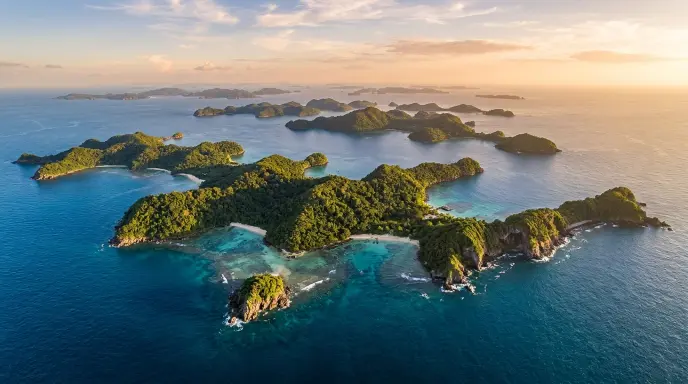
Formal writing often requires geographical terms that describe a landform accurately. The following alternatives are especially useful in academic writing, geography assignments, travel publications, and environmental reports.
1. Isle
Meaning: An island, often used in literary or geographical names.
Explanation: Isle is the closest direct alternative to island. It may sound more poetic or traditional, but the basic meaning is similar.
Example: The small isle attracted visitors interested in its quiet beaches.
Best Use: Travel writing, literature, place names, and descriptive prose.
Worst Use: Avoid replacing every instance of island with isle in technical reports if the repetition sounds unnatural.
Tone: Literary, traditional, or neutral.
2. Islet
Meaning: A small island.
Explanation: An islet is a smaller landform surrounded by water. It is a narrower term than island.
Example: A rocky islet stood just beyond the harbor.
Best Use: Geography, nature writing, and descriptions of small landforms.
Worst Use: Do not use it for a large island.
Tone: Neutral and geographical.
3. Atoll
Meaning: A ring-shaped coral reef or island system that surrounds a lagoon.
Explanation: An atoll is a particular type of island formation, commonly associated with tropical oceans. It is not a general synonym for every island.
Example: The researchers studied the coral ecosystem of the remote atoll.
Best Use: Marine biology, geography, geology, and environmental writing.
Worst Use: Avoid using it for an ordinary volcanic or continental island.
Tone: Technical and geographical.
4. Cay
Meaning: A small, low island made largely of sand or coral material.
Explanation: A cay often forms on or near coral reefs. It is a specific geographical term rather than a universal alternative to island.
Example: The boat stopped near a sandy cay.
Best Use: Coastal geography and descriptions of tropical environments.
Worst Use: Do not use it for a mountainous island unless the landform genuinely qualifies as a cay.
Tone: Geographical and descriptive.
5. Key
Meaning: A low island, especially one formed from sand or coral in tropical waters.
Explanation: In geographical usage, key is closely related to cay. The term appears in place names, particularly in the Florida Keys.
Example: The family rented a cottage on a small Florida key.
Best Use: Regional geography, travel writing, and descriptions of tropical coastal areas.
Worst Use: Avoid it when readers might interpret key as an object used to open a lock.
Tone: Regional and geographical.
6. Archipelago
Meaning: A group or chain of islands.
Explanation: An archipelago is not a synonym for one island. It describes a collection of islands that form a geographical group.
Example: The archipelago contains hundreds of islands of different sizes.
Best Use: Geography textbooks, research papers, and regional descriptions.
Worst Use: Do not use it when referring to just one island.
Tone: Formal and geographical.
7. Landmass
Meaning: A large continuous area of land.
Explanation: Landmass can describe land in a broad geographical sense, but it is not a precise synonym for an island. It is useful when the emphasis is on the physical area of land.
Example: The island’s landmass includes mountains, forests, and coastal plains.
Best Use: Geography, geology, and environmental reports.
Worst Use: Avoid it when you need to identify a small island specifically.
Tone: Formal and descriptive.
8. Landform
Meaning: A natural feature of the Earth’s surface.
Explanation: An island is one kind of landform, but the word also includes mountains, valleys, plains, and other features.
Example: The island is a distinctive landform created by volcanic activity.
Best Use: Geography education and scientific writing.
Worst Use: Do not replace island with landform if the sentence requires a specific geographical feature.
Tone: Academic and technical.
9. Continental Island
Meaning: An island that forms part of a continental landmass in geological terms but is separated from it by water.
Explanation: Continental islands are often associated with continental shelves. This term describes an island’s geological origin or relationship to a continent.
Example: The continental island supports plant species found on the nearby mainland.
Best Use: Geology, biogeography, and academic research.
Worst Use: Avoid using it for every island, especially those formed through oceanic volcanic activity.
Tone: Scientific and formal.
10. Oceanic Island
Meaning: An island that rises from the ocean floor and is not simply a separated part of a continent.
Explanation: Oceanic islands may form through volcanic activity or other oceanic processes. This term identifies a geological category.
Example: The oceanic island developed around an ancient volcanic formation.
Best Use: Geology, oceanography, and environmental science.
Worst Use: Do not use it when you only want a general word for an island.
Tone: Scientific and technical.
11. Barrier Island
Meaning: A long, narrow island that lies parallel to a mainland coast and helps separate it from the open sea.
Explanation: Barrier islands are important coastal landforms. They can help reduce wave energy and influence coastal ecosystems.
Example: The barrier island protects the inland marshes from some wave action.
Best Use: Coastal management, geography, and environmental studies.
Worst Use: Avoid using it for an inland island or a steep volcanic island.
Tone: Technical and geographical.
12. Volcanic Island
Meaning: An island formed through volcanic activity.
Explanation: Volcanic islands develop when volcanic material builds up enough to rise above the water. The phrase describes how the island formed.
Example: The volcanic island has a rugged landscape and dark rock formations.
Best Use: Geology, educational writing, and travel descriptions.
Worst Use: Do not use it unless volcanic origins are known or supported by evidence.
Tone: Scientific and descriptive.
Semi-Formal and Neutral Alternatives for Island
These words and phrases are useful in school assignments, everyday writing, travel content, and general descriptions. Some are direct alternatives, while others explain a particular kind of island.
13. Small Island
Meaning: An island with a relatively limited area.
Explanation: This is a simple descriptive phrase rather than a special geographical category.
Example: A small island lies a short distance from the coast.
Best Use: General writing when the exact geographical classification is unnecessary.
Worst Use: Avoid it when a more precise term, such as islet, is needed.
Tone: Neutral and accessible.
14. Offshore Synonyms for Island
Meaning: An island located off a mainland coast.
Explanation: This phrase emphasizes the island’s position relative to the mainland.
Example: The offshore island is accessible by ferry.
Best Use: Travel guides, coastal reports, and general geography.
Worst Use: It may be misleading for an island located far out in the open ocean without a meaningful nearby mainland reference.
Tone: Neutral and geographical.
15. Ocean Synonyms for Island
Meaning: An island located in an ocean.
Explanation: This is a broad descriptive phrase. It does not necessarily indicate a particular geological origin.
Example: The ocean island is known for its unique marine environment.
Best Use: General geography and travel writing.
Worst Use: Avoid it when the distinction between continental and oceanic origins matters.
Tone: Neutral.
16. River Synonyms for Island
Meaning: An island surrounded by the water of a river.
Explanation: River islands may form through sediment deposits, erosion, or changes in a river’s course.
Example: The village was built on a river island.
Best Use: Geography, local history, and travel writing.
Worst Use: Do not use it for an island surrounded by seawater.
Tone: Neutral and descriptive.
17. Lake Synonyms for Island
Meaning: An island located within a lake.
Explanation: The phrase identifies an island by the body of water surrounding it.
Example: Visitors reached the lake island by a small boat.
Best Use: Tourism, geography, and landscape descriptions.
Worst Use: Avoid it if the island is surrounded by a river or ocean.
Tone: Neutral.
18. Coastal Island
Meaning: An island near a coastline.
Explanation: This expression emphasizes location rather than geological formation.
Example: The coastal island attracts birdwatchers during migration season.
Best Use: Environmental writing and tourism content.
Worst Use: It may be too broad when a more precise term is available.
Tone: Neutral and descriptive.
19. Tidal Synonyms for Island
Meaning: An island connected to the mainland at low tide but separated by water at high tide.
Explanation: Tidal islands are shaped by the rise and fall of sea levels along the coast.
Example: Visitors walked to the tidal island at low tide.
Best Use: Coastal geography, travel advice, and nature writing.
Worst Use: Do not use it for an island that remains separated from the mainland at all tides.
Tone: Geographical and informative.
20. Coral Island
Meaning: An island formed largely from coral material.
Explanation: Coral islands are associated with reef-building organisms and the accumulation of coral-derived material.
Example: The coral island supports a fragile coastal ecosystem.
Best Use: Marine science, environmental articles, and travel writing.
Worst Use: Avoid it for an island whose formation has no meaningful connection to coral.
Tone: Scientific and descriptive.
21. Uninhabited Island
Meaning: An island without permanent residents.
Explanation: This phrase describes whether people live on the island, not how the island formed.
Example: The boat passed an uninhabited island covered in dense vegetation.
Best Use: Travel stories, geography, and wildlife writing.
Worst Use: Do not assume that an uninhabited island has never been visited or used by people.
Tone: Neutral.
22. Inhabited Island
Meaning: An island where people live.
Explanation: This is a descriptive category based on human settlement.
Example: The inhabited island has a school, a clinic, and a small port.
Best Use: Population studies, travel guides, and community profiles.
Worst Use: It is not a replacement for the word island when settlement is irrelevant.
Tone: Neutral and factual.
Informal, Literary, and Descriptive Alternatives for Island
There are few genuine slang synonyms for island. However, several familiar or expressive phrases can make travel writing, storytelling, and casual conversation more engaging.
23. Tropical Paradise
Meaning: A tropical place viewed as especially beautiful or relaxing.
Example: The travelers described the island as a tropical paradise.
When It Sounds Natural: Travel blogs, holiday descriptions, and promotional writing.
When to Avoid It: Scientific reports or neutral descriptions where subjective language is inappropriate.
Tone: Positive and promotional.
24. Desert Island
Meaning: An island that is uninhabited or isolated, especially in fictional survival stories.
Example: The novel follows a sailor stranded on a desert island.
When It Sounds Natural: Fiction, adventure stories, and casual discussions.
When to Avoid It: Do not assume a desert island is literally covered in desert terrain. The expression traditionally often means an uninhabited island.
Tone: Literary and adventurous.
25. Secluded Isle
Meaning: An island that is quiet, private, or away from busy places.
Example: They spent the weekend on a secluded isle.
When It Sounds Natural: Travel articles, fiction, and descriptive writing.
When to Avoid It: Formal geographical descriptions that require objective terminology.
Tone: Literary and peaceful.
26. Island Retreat
Meaning: An island or island destination used as a place to relax or get away from everyday life.
Example: The resort offers an island retreat for visitors seeking quiet surroundings.
When It Sounds Natural: Tourism, lifestyle articles, and marketing.
When to Avoid It: It does not identify a particular landform or geological type.
Tone: Relaxing and promotional.
27. Island Sanctuary
Meaning: An island regarded as a place of safety, refuge, or protection.
Example: The remote island became a sanctuary for endangered seabirds.
When It Sounds Natural: Wildlife conservation, storytelling, and descriptive writing.
When to Avoid It: Avoid it if the island has no sanctuary function or symbolic meaning.
Tone: Protective and evocative.
28. Island Outpost
Meaning: An isolated settlement, station, or base on an island.
Example: The research team established a small island outpost.
When It Sounds Natural: Adventure stories, military history, research reports, and remote operations.
When to Avoid It: It refers to a place or facility on an island, not the island itself.
Tone: Descriptive and practical.
True Synonyms vs. Contextual Alternatives for Island
Understanding the difference between direct synonyms and related geographical terms helps you avoid errors in academic and general writing.
| Type | What It Means | Can It Replace Island? |
|---|---|---|
| True synonym | A word with essentially the same meaning | Yes, isle often can |
| Near synonym | A related word with a narrower meaning | Sometimes; islet means a small island |
| Contextual alternative | A phrase that describes a particular island | Only when the context fits |
| Broader expression | A general term for a physical feature | Sometimes; landform is broader |
| Narrower expression | A specific type of island | Only when the island fits that category |
| Collective term | A word for a group of islands | No; archipelago means a group |
| Figurative expression | A phrase that adds mood or symbolism | Only in descriptive or literary contexts |
For example, you can replace island with isle in many sentences without changing the meaning. You cannot replace it with archipelago when describing one island, because the latter refers to a group. Similarly, tropical paradise conveys an impression rather than a precise geographical classification.
Industry-Specific Uses of Island-Related Terms
Business Writing
In business writing, the word island may appear in tourism, real estate, shipping, infrastructure, and regional development.
Choose specific expressions when relevant:
- Island destination: A place marketed to tourists.
- Offshore island: An island located away from a mainland coast.
- Island territory: A territory consisting of one or more islands.
- Remote island community: A community located far from major population centers.
Example: “The company plans to expand ferry services to the remote island community.”
Corporate Communication
Corporate reports should identify the location accurately rather than use poetic expressions.
Example: “The company operates three facilities on the island.”
If the report concerns a group of islands, archipelago may be more precise. Use island territory when discussing a territory’s administrative or political status, provided that description is accurate.
Academic Writing
Academic writing benefits from geographical precision.
- Use islet for a small island.
- Use atoll for the appropriate ring-shaped reef or island system.
- Use barrier island for a long, narrow coastal island of that type.
- Use oceanic island or continental island when discussing geological origin.
- Use archipelago for a group of islands.
Example: “The researchers examined plant diversity across the archipelago.”
Avoid using tropical paradise in scientific writing unless you are discussing tourism language or perceptions of a destination.
Customer Service
Travel companies and booking services should use clear terms that help customers understand the location.
Example: “The resort is located on a small offshore island and is accessible by ferry.”
If access depends on tides, say so directly rather than using vague wording such as “secluded island destination.”
Legal and Administrative Writing
In legal and administrative contexts, island, island territory, and archipelago may describe different geographical or political arrangements.
Do not assume these terms have identical legal meanings. Use the terminology found in the relevant official records, agreements, or laws. A geographical synonym should not replace a defined legal term without verification.
Email Communication
In emails, simple and accurate wording is usually best.
For example:
- “The meeting will take place on the island.”
- “The ferry serves the offshore island twice daily.”
- “The survey covers several islands in the archipelago.”
These expressions tell the reader exactly where the activity will happen.
Email Examples Using Island-Related Terms
Email 1: Travel Inquiry
Subject: Ferry Access to the Island
Hello,
I am planning a visit to the island next month. Could you please confirm the ferry schedule and let me know whether advance reservations are required?
Thank you for your help.
Best regards, Morgan
Email 2: Research Project
Subject: Geographic Scope of the Study
Dear Dr. Patel,
The revised research plan will examine biodiversity across the archipelago rather than focusing on a single island. This should allow us to compare ecological patterns across several locations.
Please let me know if you recommend any changes.
Best, Taylor
Email 3: Tourism Website Update
Subject: Description of the Offshore Island
Hi Jordan,
Could we update the website to explain that the resort is located on an offshore island? Visitors may also benefit from a short note about ferry access and travel times.
Thanks, Alex
Email 4: Environmental Report
Subject: Coastal Habitat Assessment
Hello Team,
The field assessment will include the barrier island and the nearby coastal marshes. Please make sure the report distinguishes these landforms clearly.
Regards, Sam
Email 5: School Assignment
Subject: Question About Island Terminology
Dear Ms. Lewis,
I am writing about my geography assignment. Would islet be the appropriate term for a small island near the coast, or should I use small island for clarity?
Thank you for your guidance.
Sincerely, Jamie
Short Dialogue Examples Using Synonyms for Island
Workplace Discussion
Person A: Where will the field team conduct its survey?
Person B: On the offshore island near the harbor.
Classroom Conversation
Person A: What is an archipelago?
Person B: It is a group of islands, not just one island.
Travel Customer Service
Person A: Is the resort located on the mainland?
Person B: No, it is on a small offshore island. You can reach it by ferry.
Casual Conversation
Person A: Where did you stay during your vacation?
Person B: On a secluded isle with quiet beaches and walking trails.
Geography Discussion
Person A: Is every small island an atoll?
Person B: No. An atoll is a particular kind of reef or island formation, while small island is a general description.
How to Replace “Island” in a Sentence
Example 1: Using Isle
Original: They visited a beautiful island.
Alternative: They visited a beautiful isle.
Why it works: Isle is a close synonym that adds a slightly more literary tone.
Example 2: Using Islet
Original: A small island appeared near the coast.
Alternative: An islet appeared near the coast.
Why it works: Islet is more concise when the landform is genuinely small.
Example 3: Using Atoll
Original: The researchers explored the island surrounding the lagoon.
Alternative: The researchers explored the atoll surrounding the lagoon.
Why it works: This replacement is appropriate only if the geographical formation is an atoll.
Example 4: Using Archipelago
Original: The island contains several distinct communities.
Alternative: The archipelago contains several distinct communities.
Why it works: This changes the meaning from one island to a group of islands. Use it only if the communities are spread across multiple islands.
Example 5: Using River Island
Original: The village stands on an island in the river.
Alternative: The village stands on a river island.
Why it works: The phrase is shorter while preserving the geographical meaning.
Example 6: Using Barrier Island
Original: The long island lies parallel to the mainland coast.
Alternative: The barrier island lies parallel to the mainland coast.
Why it works: This is more precise if the landform meets the definition of a barrier island.
Example 7: Using Island Retreat
Original: They chose an island as a quiet holiday destination.
Alternative: They chose an island retreat for a quiet holiday.
Why it works: The alternative emphasizes relaxation rather than the island’s physical geography.
Example 8: Using Uninhabited Island
Original: The island had no permanent residents.
Alternative: The uninhabited island attracted wildlife researchers.
Why it works: The replacement highlights the absence of permanent residents, which may be relevant to the sentence.
Example 9: Using Oceanic Island
Original: The island formed far from the continent.
Alternative: The oceanic island formed far from the continent.
Why it works: The alternative adds geological specificity if the island is known to have an oceanic origin.
Example 10: Using Offshore Island
Original: The island lies a short distance from the mainland.
Alternative: The offshore island lies a short distance from the mainland.
Why it works: The revised phrase emphasizes the island’s location relative to the mainland.
Comparison Table of Island Synonyms and Related Terms
| Phrase | Tone | Meaning or Scope | Best Use | Example |
|---|---|---|---|---|
| Isle | Literary or neutral | An island | Descriptive writing | The isle was quiet. |
| Islet | Neutral | A small island | Geography | The islet lies offshore. |
| Atoll | Technical | A specific reef or island formation | Marine geography | The atoll surrounds a lagoon. |
| Cay | Geographical | A small, low island | Tropical coastal regions | A cay appeared beyond the reef. |
| Key | Regional | A low island, often coral or sand | Place names and regional geography | They visited a Florida key. |
| Archipelago | Formal | A group of islands | Geography and research | The archipelago spans a large area. |
| Landmass | Formal | A large continuous area of land | Geology | The island’s landmass is mountainous. |
| River island | Neutral | An island in a river | Local geography | The village occupies a river island. |
| Barrier island | Technical | A long, narrow coastal island | Coastal studies | The barrier island protects the lagoon. |
| Tidal island | Technical | An island connected to land at low tide | Coastal geography | The tidal island is accessible at low tide. |
| Secluded isle | Literary | A quiet, isolated island | Travel writing | They explored a secluded isle. |
| Island retreat | Promotional | A place for relaxation on an island | Tourism | The resort offers an island retreat. |
Which Island Synonym Should You Choose?
The right word depends on the purpose of your writing.
- Formal writing: Use isle for a direct alternative, or a precise geographical term when appropriate.
- Business communication: Choose offshore island, island destination, or island territory according to the context.
- Academic writing: Use islet, atoll, barrier island, continental island, or archipelago only when the geographical meaning fits.
- Legal writing: Follow the terminology in relevant official records and legal definitions.
- Professional emails: Prefer island or a clear descriptive phrase.
- Everyday conversation: Island, isle, and small island are easy to understand.
- Travel and creative writing: Secluded isle, tropical paradise, and island retreat can add atmosphere.
- Environmental writing: Use terms such as coral island, tidal island, or barrier island when they accurately describe the landform.
Grammar and Usage Guide for Island Synonyms
Singular and Plural Forms
The standard plural of island is islands.
Examples:
- Singular: The island is beautiful.
- Plural: The islands attract visitors.
Other common forms include:
- Isle → isles
- Islet → islets
- Atoll → atolls
- Cay → cays
- Archipelago → archipelagos
Using Island as a Noun Modifier
The word island can describe another noun.
Examples:
- Island life
- Island community
- Island tourism
- Island ecosystem
- Island nation
In these expressions, island functions as a noun that modifies another noun.
Common Prepositions With Island
Use prepositions that express location or movement clearly.
- On an island: They live on an island.
- To an island: We traveled to the island.
- From an island: The ferry departed from the island.
- Around an island: The boat sailed around the island.
- Across the island: A road runs across the island.
Capitalization
The word island is usually lowercase unless it appears at the beginning of a sentence or in a proper name.
Examples:
- Correct: The island is known for its beaches.
- Correct: They visited Long Island.
- Correct: The island belongs to a larger archipelago.
Follow the official spelling of geographical names.
Common Word Combinations
Some expressions are more natural than others:
- Remote island
- Tropical island
- Volcanic island
- Island community
- Island nation
- Island chain
- Island ecosystem
Choose combinations that reflect the real geographical or social feature being described.
Common Mistakes to Avoid When Using Synonyms for Island
1. Treating Every Related Term as a Direct Synonym
An archipelago is a group of islands, while an islet is a small island. Neither can replace island in every sentence.
2. Confusing an Atoll With Any Island
An atoll has a specific geological structure. Use the term only when that structure is relevant.
3. Assuming Every Cay Is a Tropical Paradise
A cay is a geographical landform, not a guarantee of beautiful scenery, tourist facilities, or warm weather.
4. Using Literary Language in Technical Reports
Expressions such as secluded isle and tropical paradise may be suitable for travel content but lack precision in scientific writing.
5. Confusing an Island With a Peninsula
An island is surrounded by water, while a peninsula is connected to a larger landmass and extends into water.
6. Using Landmass Too Broadly
Landmass often describes a large continuous area of land. It is not always the best substitute for a small island.
7. Ignoring Geological Differences
A volcanic island, continental island, and barrier island describe different characteristics. Do not use them interchangeably.
8. Overusing Unusual Vocabulary
Replacing every occurrence of island with a less common term can make writing confusing. Repeat the original word when it remains the clearest choice.
When Not to Use the Original Word Island
Although island is accurate in most general contexts, another term may be better in certain situations.
When the Island Is Very Small
Use islet when its small size matters to the description.
When the Landform Has a Specific Geological Type
Use atoll, cay, barrier island, or volcanic island when the relevant features are known.
When You Mean Several Islands
Use archipelago or island chain when discussing a group of islands rather than one.
When You Want a More Descriptive Tone
In creative or travel writing, secluded isle or island retreat may communicate the atmosphere more effectively.
When You Need to Describe Settlement
Use inhabited island or uninhabited island if the presence or absence of permanent residents matters.
When Precision Is More Important Than Variety
Keep island when it is the most accurate and understandable term. A synonym is useful only if it preserves the intended meaning.
Advanced Writer Tips for Choosing Island Synonyms
Tone Control
Use isle for a literary feel and island for everyday clarity. Technical terms such as atoll and barrier island work best in geographical contexts.
Professional Email Etiquette
Use straightforward expressions in professional emails. “The survey covers the offshore island” is clearer than an elaborate phrase such as “the secluded isle of interest.”
Politeness
Geographical terms do not usually carry politeness levels, but clarity matters when giving directions or travel instructions. Specify the island and access conditions rather than relying on vague descriptions.
Context Alignment
Think about what matters most: the island’s size, location, origin, population, or atmosphere. Choose the term that highlights that feature.
Precision
Do not call a landform an atoll, cay, or barrier island without enough geographical information to support the label.
Readability
Use simple phrases when they communicate the idea clearly. Small island may be preferable to islet for younger readers or a general audience.
Related Questions About Synonyms for Island
What Is Another Word for Island?
The closest alternative is isle. Depending on the context, you may also use islet, offshore island, or a specific geographical term such as atoll.
What Is a More Formal Word for Island?
Isle is a formal or literary alternative in some contexts. In technical writing, a more specific term such as atoll or barrier island may be appropriate if the landform fits that definition.
What Is a Small Island Called?
A small island is often called an islet. The word is especially useful when the island’s small size is relevant.
Is an Archipelago the Same as an Island?
No. An island is an area of land surrounded by water, while an archipelago is a group or chain of islands.
Is Isle a True Synonym for Island?
Yes. Isle is a close synonym for island in many contexts. However, it is often used in literary expressions and established place names.
What Is the Difference Between an Island and an Atoll?
An island is a general geographical feature surrounded by water. An atoll is a specific ring-shaped reef or island system that surrounds a lagoon.
What Is a More Descriptive Word for Island?
Phrases such as secluded isle, tropical paradise, and island retreat can add atmosphere. However, these expressions are descriptive alternatives, not exact geographical synonyms.
FAQs About Synonyms for Island
1. What Are the Best Synonyms for Island?
Isle is the closest general synonym. Islet refers to a small island, while atoll, cay, and barrier island describe particular geographical formations.
2. Can I Use Isle Instead of Island?
Yes. Isle can replace island in many sentences. It often sounds more literary or traditional, so island may be preferable in plain, everyday writing.
3. What Is the Scientific Term for an Island?
There is no single scientific replacement for every island. Geographers use specific terms such as oceanic island, continental island, atoll, and barrier island according to the landform’s characteristics.
4. What Is the Difference Between an Isle and an Islet?
An isle is another word for an island, while an islet is a small island. The main difference is that islet specifically indicates smaller size.
5. Is a Key the Same as a Cay?
In geographical usage, key and cay can refer to similar low islands formed from sand or coral material. Regional naming conventions vary, and key also has several unrelated meanings in English.
6. What Is Another Word for a Group of Islands?
An archipelago is a group or chain of islands. The term is common in geography and academic writing.
7. What Is a Good Synonym for Island in Creative Writing?
Isle, secluded isle, and island sanctuary can add a descriptive or literary tone. Choose the expression according to the mood and meaning you want to convey.
Conclusion:
Finding the best synonyms for island means understanding the difference between direct alternatives and specific geographical terms. Isle is a useful replacement in many contexts, while islet refers to a small island. Terms such as atoll, cay, key, and barrier island describe particular types of landforms, and archipelago refers to a group of islands rather than one.
Your choice should depend on what you want the reader to understand. Academic and scientific writing benefits from precise geographical vocabulary, while travel articles and creative stories can use descriptive phrases such as secluded isle or island retreat. In everyday communication, the word island is often the clearest option.
Rather than replacing it simply to avoid repetition, choose an alternative that adds meaningful information, improves the tone, or describes the landform more accurately. That approach makes your writing easier to understand and more useful to readers.